
Shibashi (太極氣功十八式) is a Chinese word for «eighteen forms.» In 1979, Professor Lin Housheng joined the flowing style of Tai Chi with the breathwork and meditation of Qigong, producing a sequence that beginners can follow and experienced practitioners can keep refining for years.
One round of the 18 movements takes less than twenty minutes. Each gesture moves at the pace of the breath, and the mind rests on a simple image, such as casting a fishing net or rowing across a lake.
The appeal is its balance. Because the movements are few and repeated, you can learn the sequence quickly, then spend years refining what happens inside it. That is why Shibashi qigong is practiced both by complete beginners and by long-time Tai Chi and Qigong students looking for something deeper.
Shibashi is taught in Chinese medicine universities and has been promoted as a public health exercise in several Asian countries. Its reach grew with Professor Lin’s lineage: the complete system now spans eight forms developed between 1979 and 2010.
Practiced lightly, the form is a gentle daily exercise. Practiced with guidance, it becomes a way to train posture, breathing and attention together. It complements medical care and does not replace it.
The inner side of the practice is easy to overlook. A casual round already feels good, so many people stop there and never discover the «inner form.» With regular guided practice, the same tai chi qigong 18 movements train every major pattern of energy movement in the body.
According to the lineage, the United Nations Development Programme recommended promoting Shibashi internationally in 1991, and government health programs in Indonesia, Malaysia, Singapore and Thailand have encouraged it as well.
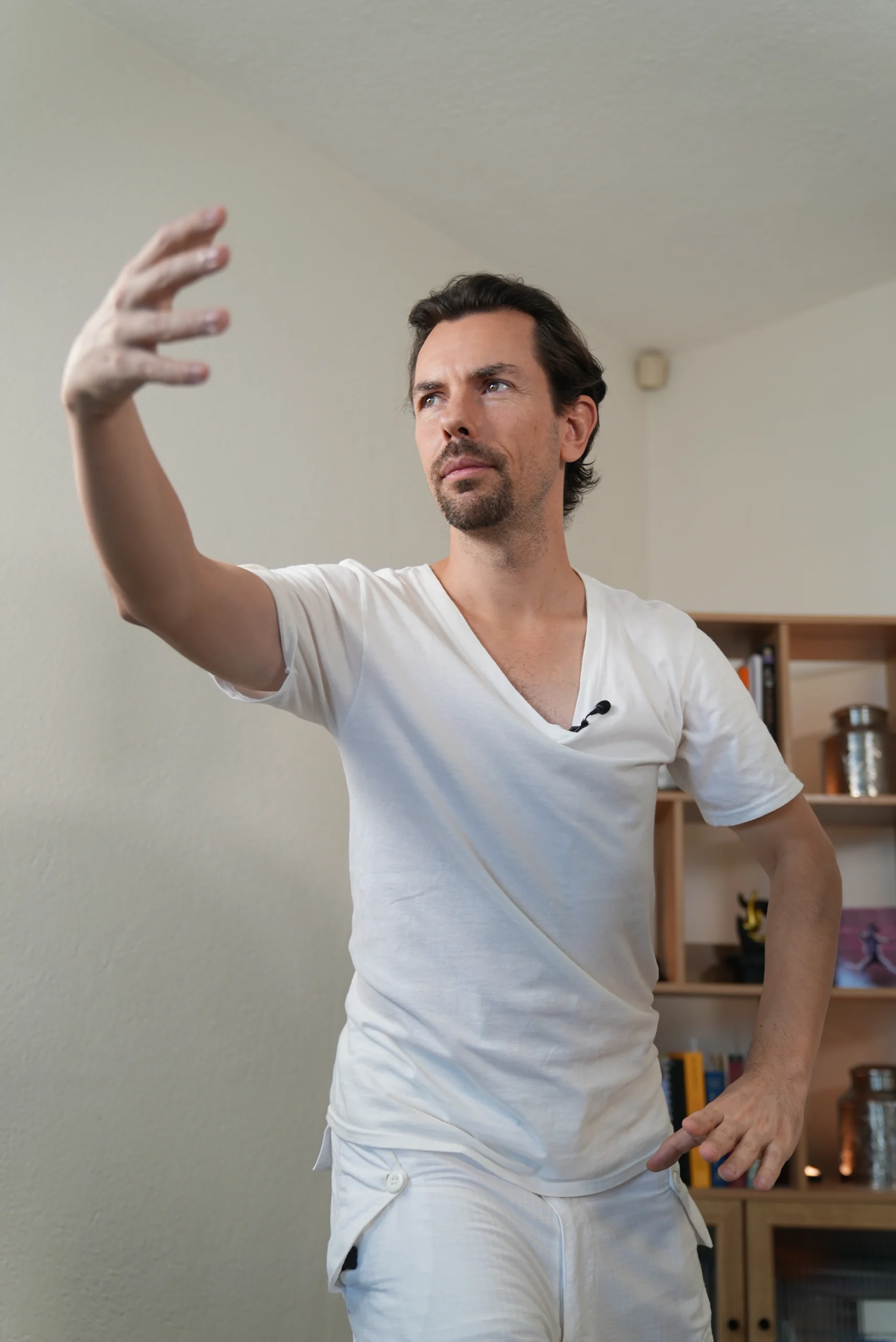
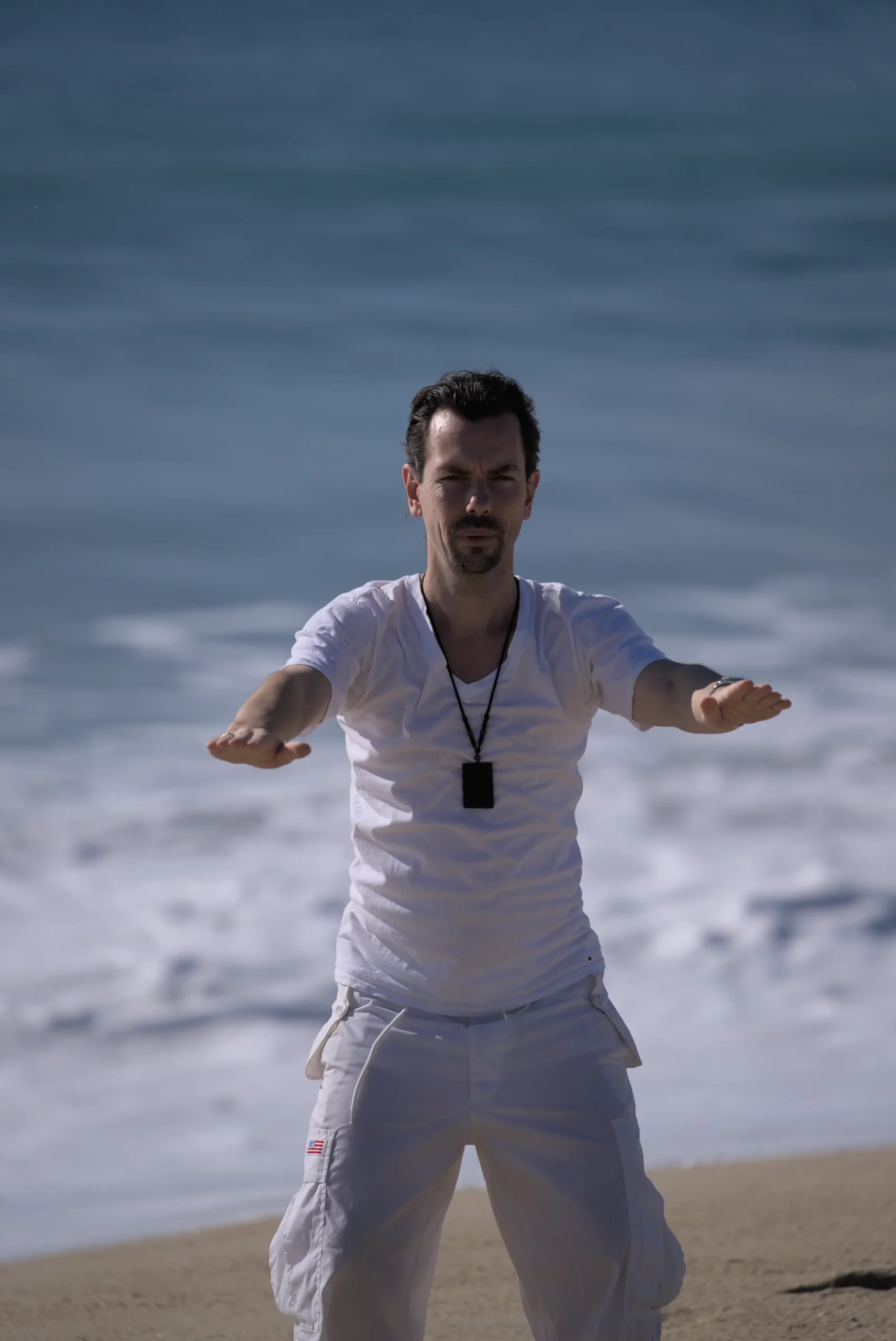
Body. The whole body moves as one, slowly and without interruption. The hands lead, while the head and eyes follow them.
Breath. Breathing sets the rhythm for every movement. Inhale through the nose, exhale softly through the mouth, and never hold the breath. Natural breathing comes first; fuller breathing develops with regular practice.
Mind. Attention stays quiet, either resting in stillness or holding the image linked to each movement. It observes the circulation of Qi without forcing it.
These three adjustments take time to integrate. They are worked on together rather than one by one, and the form itself is simply the tool. As they settle in, the same ease begins to show up in how you sit, walk and respond to everyday life.
Four small reminders help during practice: let the hands guide the flow of Qi, keep the shoulders and face soft, never force the breath, and take a few quiet minutes first if you feel emotional.
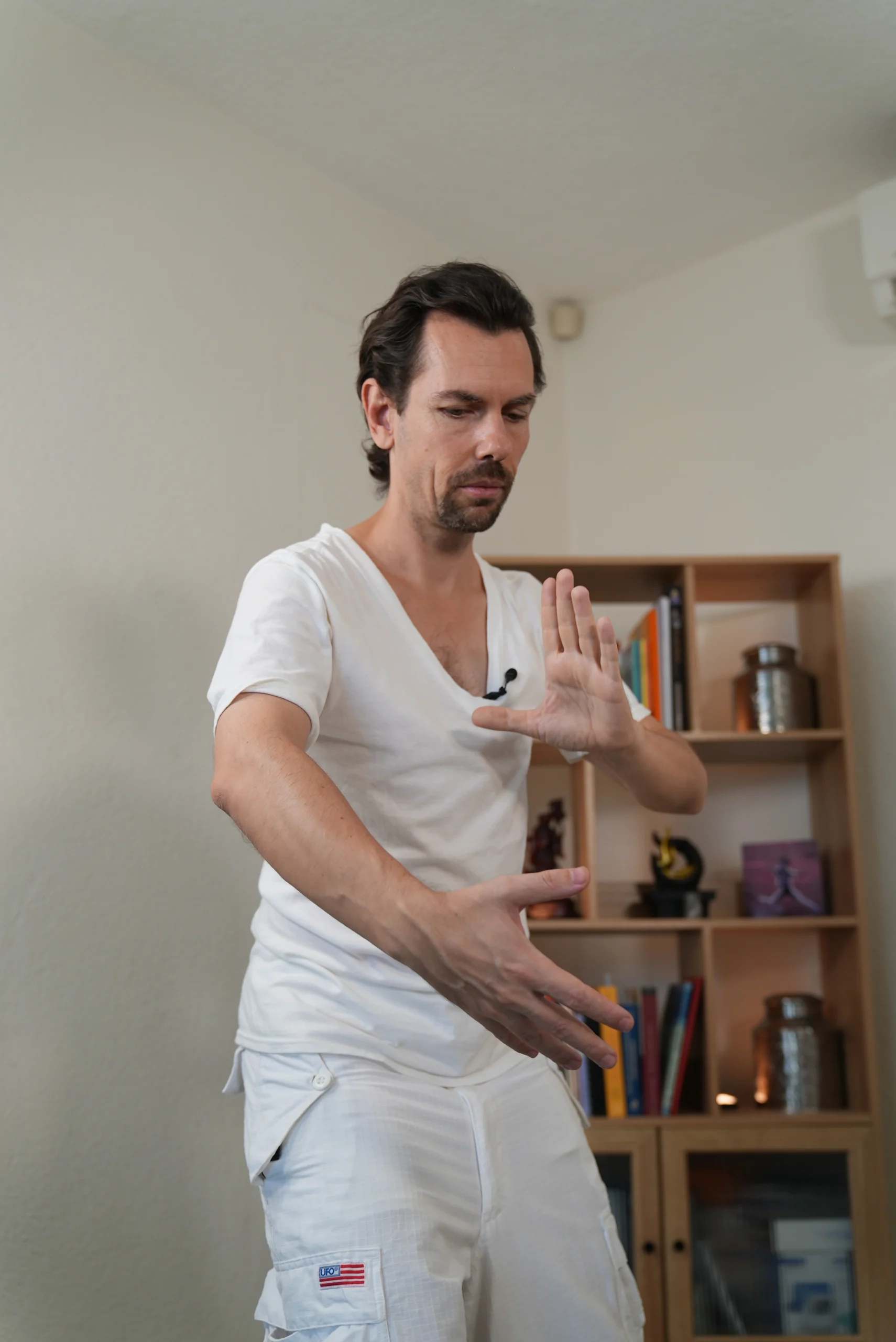
Set 1 teaches the main movements of Qi: rising and sinking, opening and closing, gathering and releasing. Whole-body movement and abdominal breathing are trained here first.
Set 2 brings in the energy of the Earth, using deeper leg work and greater weight transfer. Set 3 then turns toward the connection with the Sky, completing the classical picture of a person standing between Heaven and Earth.
New to the practice? Read our introduction to Shibashi, or learn about its creator, Lin Housheng.
What Set 1 develops: abdominal, thoracic and full-body breathing; awareness of the lower, middle and upper Dantian; and the ability to enter the calm state known as Rujing. Each movement prepares the next, so a weakness is trained across the whole session rather than in a single gesture.
What Set 2 develops: stronger legs, clearer weight transfer and a sense of Earth energy rising through the body.
What Set 3 develops: a central axis of Qi circulation between Sky and Earth, the first step toward the deeper levels of Qigong training. Beyond these sets, advanced students can continue into forms such as Set 4, which focuses on therapeutic use, and the Elite form known as Set 8.
If you want to teach, the Teacher Training program builds on this same foundation.