
Shibashi, also written shi ba shi, comes from the Chinese for «eighteen.» The full name, Taiji Qigong Shibashi (太極氣功十八式), describes exactly what it is: a Qigong sequence of 18 movements shaped by the slow, circular character of Tai Chi.
It was created in 1979 by Professor Lin Housheng, a former director of the Shanghai Qigong Research Institute. He wanted a form that ordinary people could learn easily and practice almost anywhere.
You may see several spellings and names for the same practice: Shibashi, shi ba shi, Shibashi qigong, Tai Chi Qigong 18 Movements or Taiji Qigong in 18 Forms. They generally point to the same family of movements, although the details vary a great deal from teacher to teacher.
Compared with a long Tai Chi form, Shibashi has fewer steps to memorize and each movement repeats. That leaves attention free for the breath and for the quality of the movement, so many people feel calmer and more energized after one short session.
The names of the movements give the mind something simple to rest on, which is why the practice is often described as moving meditation.
A typical session takes under twenty minutes. You stand comfortably and move through the sequence slowly, letting each inhale and exhale set the pace. The movements have evocative names, such as expanding the chest or rowing a boat on a lake.
Breathing starts out natural. The inhale comes through the nose and the exhale leaves gently through the mouth, without ever holding the breath.
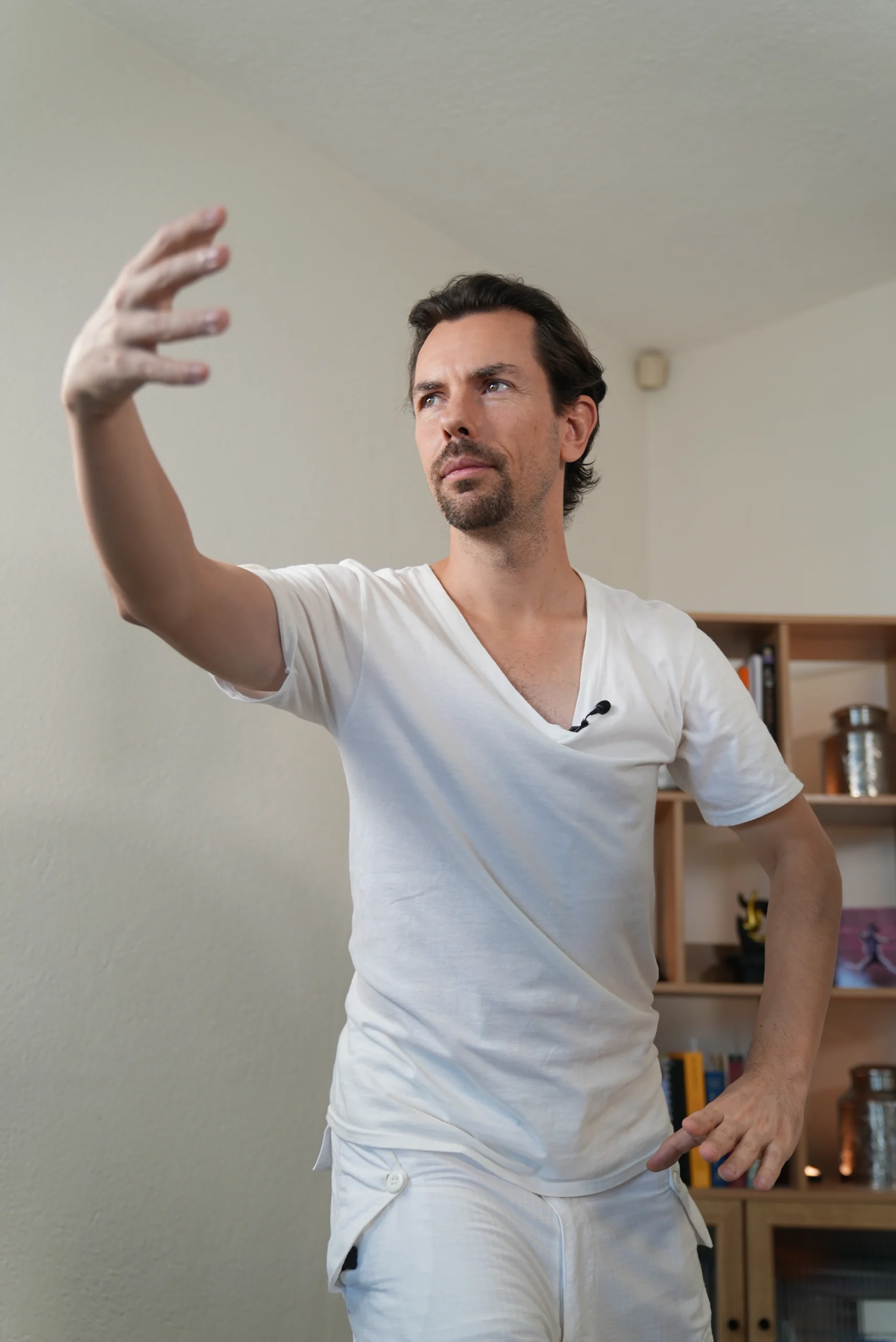
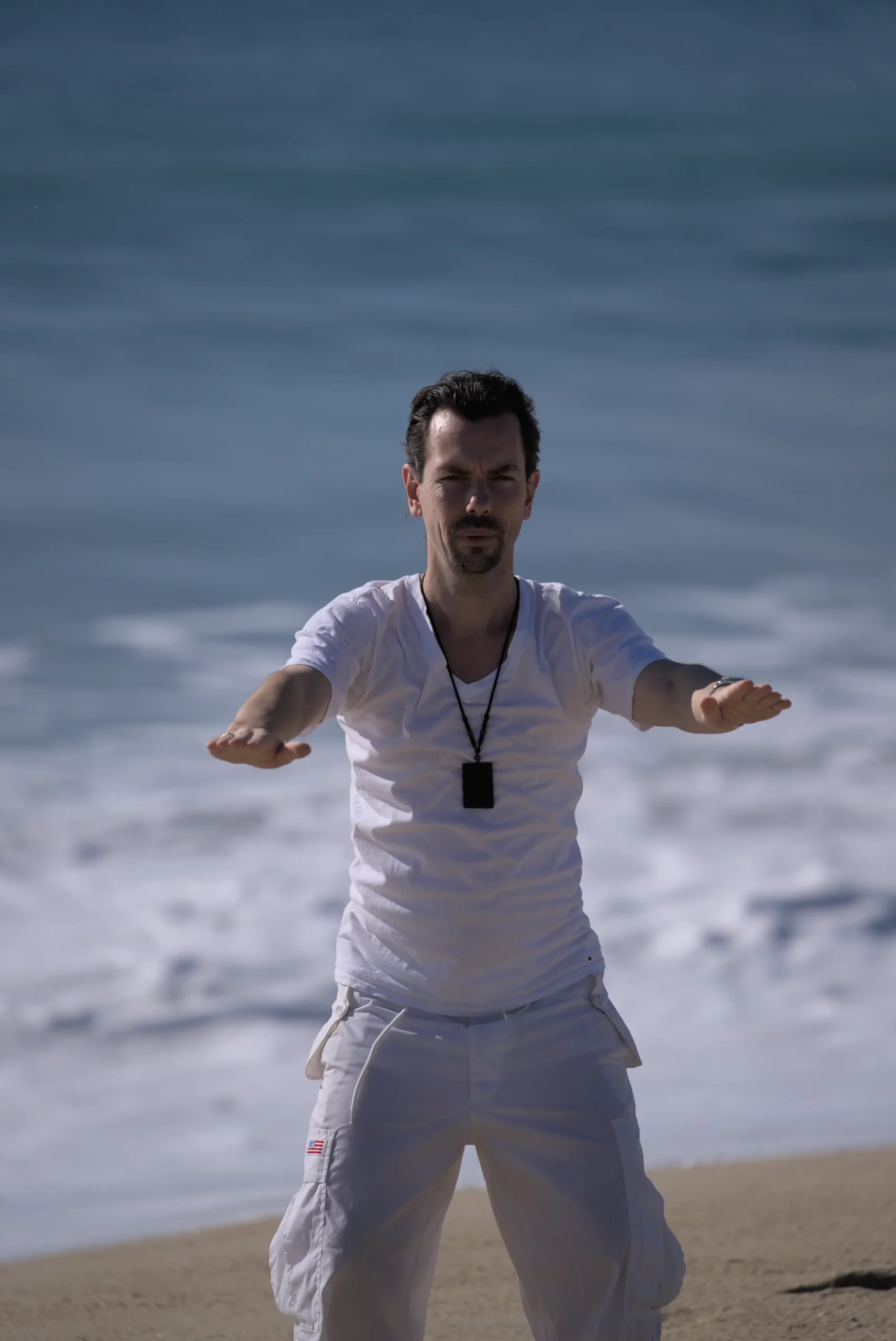
Students usually come for gentle movement, relaxation or better breathing. Shibashi is taught in Chinese medicine universities and is widely practiced as a health exercise in parts of Asia. It works best as a complement to medical care, never a substitute for it.
Over time, the same simple gestures become training for posture, breath and attention at once. That inner dimension is easy to miss when the form is learned from choreography alone.
Because the system goes well beyond one form, there is no need to rush. The full system counts eight forms, created between 1979 and 2010, and the first set alone offers plenty to explore.
Fabrice Piché, who represents this lineage, teaches the form as its creator intended, including the internal work behind the choreography. You can read more about Professor Lin Housheng and this lineage.
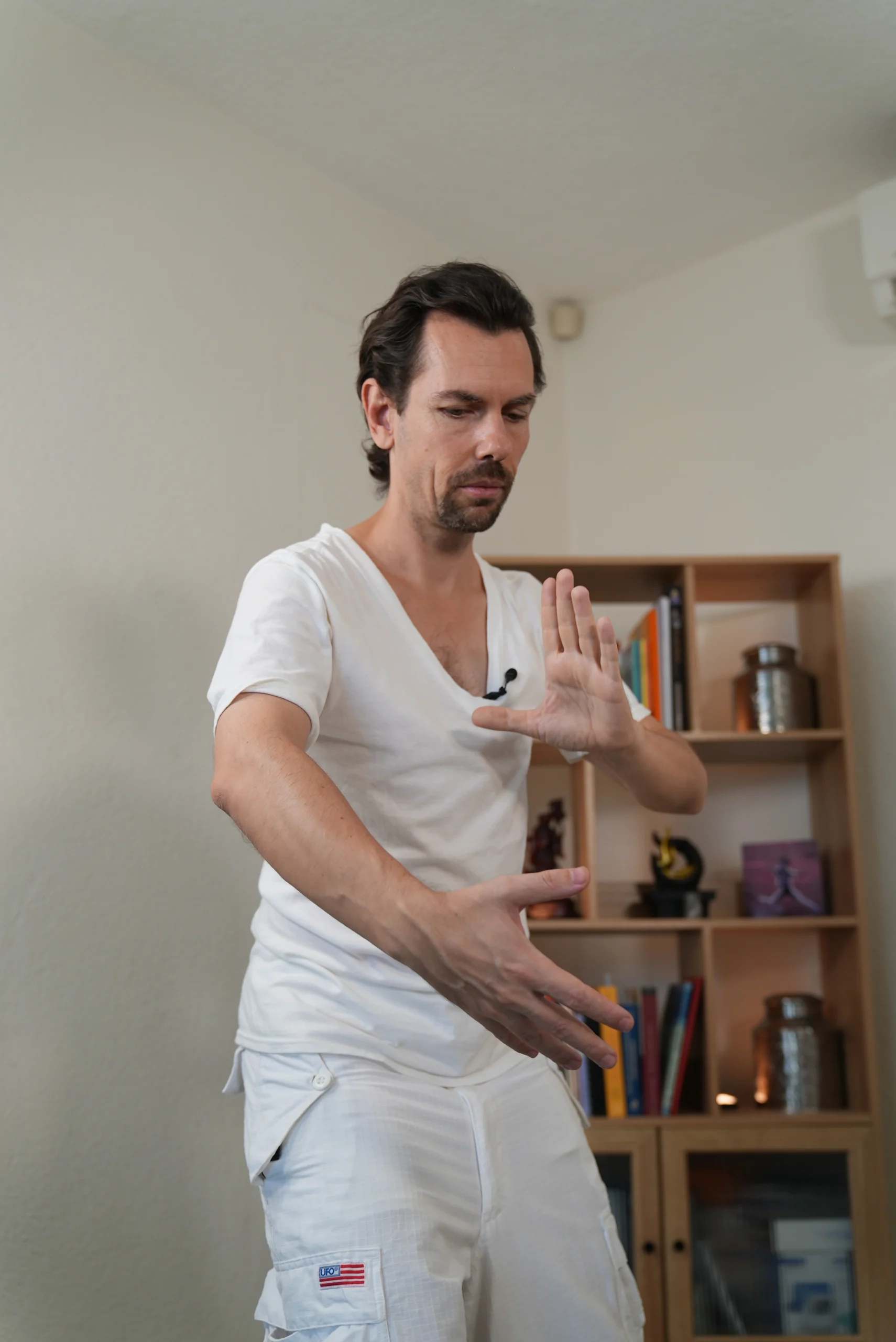
Start with Set 1, which introduces the main movements of Qi and the foundations of breathing. When it feels comfortable, continue with Set 2.
For the wider picture of the system, visit the Tai Chi Qigong Academy page.
Our academy page explains the principles of body, breath and mind in more detail. Keep your first sessions short and regular, and pay attention to how the movement feels rather than how it looks.